£ 50.99
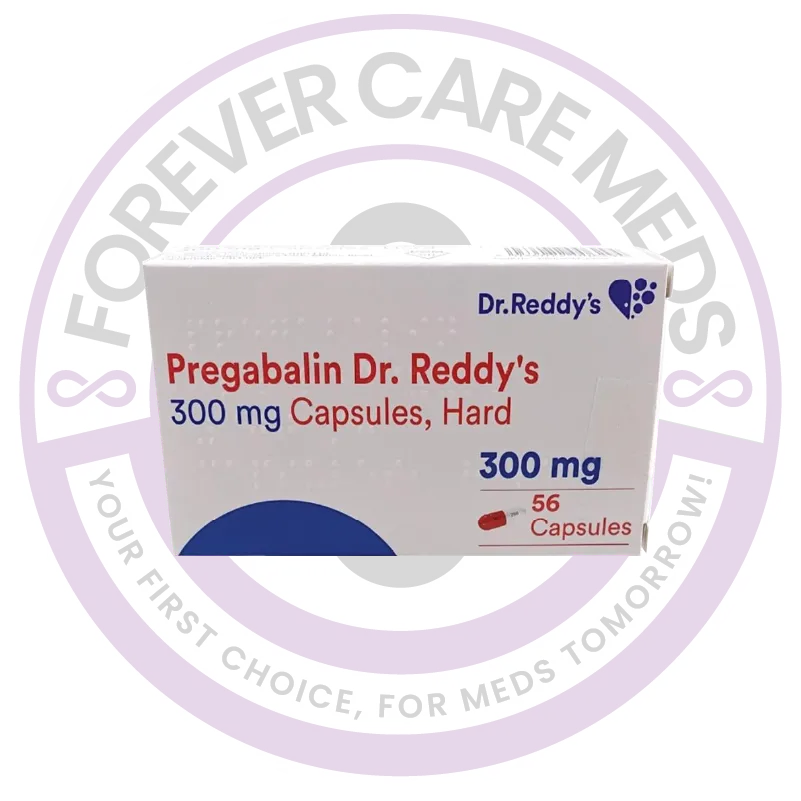
Pregabalin 300mg capsules are a prescription medicine used in adults for neuropathic nerve pain, generalised anxiety disorder (GAD) and as an additional treatment for certain types of epilepsy. Each hard capsule contains 300mg of pregabalin.
This product is available in quantities of 56 or 150 capsules, with manufacturer options including Accord, RelonChem, Dr Reddy’s, Noumed, Teva UK and MSN Laboratories, subject to availability.
Pregabalin is a Class C, Schedule 3 controlled drug in Great Britain and can cause dependence, addiction, tolerance and withdrawal. Take it only as prescribed and do not increase your dose or stop treatment suddenly without medical advice.
Always check the manufacturer, strength and patient information leaflet supplied with your medicine before taking it.
Order by 1:30pm on a weekday to ensure your order is picked, processed and dispatched the same day, orders after 1:30pm will be dispatched on the next working day.
Please note:
Next-day Delivery UK orders between 1:30pm on Friday and 1:30pm on Monday are delivered on Tuesday.
Once we reach our cut-off point, which is 1:30pm, our team takes a short break from communications from 1:30pm until 5:00pm, so we can carefully pack and prepare our daily orders for next-day delivery. During this time, we may not be able to respond straight away, but we’ll pick up and reply to all messages as soon as we’re back at 5:00pm.
Royal Mail Delivery Charges:
Order on Monday - Thursday
Next-day Special Delivery (before 1pm): £10.50
Order on Friday
Next-day Saturday Special Delivery (before 1pm): £15.50
Bank holiday Mondays are a public holidays and therefore, Royal Mail do not operate a delivery service on these days, this also applies to all other public holidays such as Easter, Christmas Day, Boxing Day, New Years Day (1st).
If you order your parcel on a Bank Holiday weekend, it will be dispatched on Tuesday and delivery will take place on the Wednesday.
Pregabalin 300mg capsules contain 300mg of pregabalin in each hard capsule. Pregabalin is a prescription medicine used in adults for neuropathic pain, generalised anxiety disorder (GAD), and as an additional treatment for certain types of epilepsy.
The 300mg refers to the strength of each capsule. It does not mean that 300mg is automatically the appropriate dose for every person. The dose and treatment schedule should be determined by the prescribing healthcare professional according to the condition being treated, individual response and other health factors.
Pregabalin is not an opioid or benzodiazepine. It belongs to a group of medicines commonly known as gabapentinoids.
This product is currently available in quantities of 56 capsules or 150 capsules, with several manufacturer options subject to availability.
Pregabalin may be prescribed to adults for several conditions.
For neuropathic pain, Pregabalin may be used to manage pain caused by damaged or abnormal nerve signalling. Neuropathic pain can occur with conditions such as diabetes or shingles, following certain injuries, or with other conditions affecting the nerves.
For other medicines and information associated with pain management, visit our Pain Relief category.
Pregabalin may also be prescribed for generalised anxiety disorder (GAD) in adults as part of an appropriate treatment plan.
You can explore our Anti-Anxiety category for related information.
For epilepsy, Pregabalin may be prescribed alongside other treatment for certain partial seizures. It should be taken regularly and exactly as instructed by the healthcare professional responsible for your treatment.
For a more detailed discussion of the medicine, read our Pregabalin 300mg benefits, risks and safe-use guide.
The appearance, inactive ingredients and patient information leaflet may vary according to the manufacturer supplied. Always check the packaging, strength and leaflet included with the medicine you receive.
Pregabalin affects nerve signalling within the central nervous system.
For neuropathic pain, it can help reduce abnormal pain signalling associated with damaged or overactive nerves.
In epilepsy, Pregabalin may be used alongside other medicines to help reduce abnormal electrical activity associated with certain seizures.
Its effect in generalised anxiety disorder is also associated with changes in nerve signalling within the brain.
The medicine does not necessarily work immediately. How quickly someone notices a benefit can vary depending on the condition being treated and individual response.
For additional condition-focused information, read our Pregabalin for neuropathic pain, anxiety and epilepsy overview.
Take Pregabalin exactly as instructed by your doctor, pharmacist or other prescribing healthcare professional.
Pregabalin 300mg is a capsule strength, not a universal recommended dose. Do not decide how many capsules to take based solely on the strength shown on this product page.
Pregabalin capsules should be swallowed whole with water. They can be taken with or without food, but it is sensible to take them consistently in the way advised on your prescription and patient information leaflet.
Do not:
If the medicine does not appear to be working as expected, speak to your healthcare professional rather than adjusting the dose yourself. The MHRA specifically warns that feeling the need for a higher dose can be a sign of developing tolerance.
If you forget a dose, take it when you remember unless your next dose is due within approximately two hours. In that situation, skip the missed dose and take the next dose at the usual time.
Never take two doses at the same time or take an extra dose to make up for a missed one.
If you take Pregabalin for epilepsy, taking it regularly is particularly important because missed doses may increase the risk of seizures.
If you are uncertain about a missed dose, check the patient information leaflet supplied with your medicine or ask your doctor or pharmacist.
Do not suddenly stop taking Pregabalin, even if you feel better.
Abruptly stopping treatment can cause withdrawal symptoms. In people taking Pregabalin for epilepsy, suddenly stopping can also increase the risk of serious seizures.
Withdrawal symptoms can include anxiety, sleep problems, nausea, pain and sweating. Your healthcare professional may recommend gradually reducing treatment rather than stopping it suddenly.
The time needed to reduce treatment can vary, particularly after longer-term or higher-dose use.
Pregabalin is not suitable for everyone.
Make sure the healthcare professional responsible for your treatment knows about your medical conditions and all medicines, supplements and remedies you use.
Medical advice is particularly important if you:
Because different manufacturers may use different excipients, check the patient information leaflet supplied with your specific brand if you have allergies or intolerances.
Like all medicines, Pregabalin can cause side effects, although not everyone experiences them.
Common side effects include:
Some side effects may become less troublesome as your body becomes accustomed to the medicine. Speak to your doctor or pharmacist if a side effect persists, becomes troublesome or causes concern.
Pregabalin can affect blood-sugar control in some people with diabetes, so closer monitoring may sometimes be appropriate after starting treatment.
Serious side effects are less common but require prompt medical attention.
Seek urgent medical advice if you experience symptoms such as:
Pregabalin can also rarely cause a serious allergic reaction.
Always read the patient information leaflet supplied with your actual manufacturer because it contains a more complete list of possible side effects and medicine-specific warnings.
Pregabalin can cause physical dependence and addiction.
In January 2026, the MHRA strengthened UK warnings for Pregabalin and other gabapentinoids relating to addiction, dependence, tolerance and withdrawal.
These terms are related but do not mean exactly the same thing.
Tolerance can mean that the medicine feels less effective over time.
Physical dependence means the body has adapted to the medicine and withdrawal symptoms may occur if it is stopped suddenly or reduced too quickly.
Addiction can involve a strong desire to take the medicine or difficulty controlling its use.
Possible warning signs include:
Do not increase the dose yourself. Speak to your doctor if you are worried about dependence, addiction or whether your current treatment is still appropriate.
Tell your doctor or pharmacist about all medicines you take.
Particular caution is needed with medicines that can cause sleepiness or suppress the central nervous system, including strong opioid painkillers. Pregabalin can increase sedation and breathing-related risks when combined with opioids or other CNS depressants.
It is best to avoid drinking alcohol while taking Pregabalin because alcohol may increase sleepiness, impair concentration and may affect breathing.
This is one reason we are not directly cross-linking this page to opioid product pages merely for SEO.
Pregabalin can cause dizziness, sleepiness, reduced concentration and other effects that may impair your ability to drive or operate machinery.
Do not drive, cycle or use tools or machinery if Pregabalin makes you sleepy, dizzy, confused or otherwise unable to do so safely.
Taking more Pregabalin than prescribed can be dangerous.
If you take more than your prescribed dose, contact NHS 111 urgently for advice.
Go to A&E urgently if you have taken too much Pregabalin and develop symptoms such as:
Call 999 or go to A&E immediately for a severe allergic reaction, serious difficulty breathing, loss of consciousness where the person cannot be woken, or another life-threatening reaction.
If emergency treatment is needed, do not drive yourself. Where possible, take the Pregabalin packaging or leaflet, remaining medicine and details of any other medicines being used.
Pregabalin may be prescribed to adults for neuropathic pain, generalised anxiety disorder and as an additional treatment for certain partial seizures.
The reason for treatment and the appropriate dose should be determined by the healthcare professional responsible for your care.
Pregabalin is not a conventional painkiller such as paracetamol, ibuprofen or an opioid.
It affects nerve signalling and can be prescribed for neuropathic pain, which is pain associated with damaged or abnormal nerve activity.
No. Pregabalin is not an opioid.
It is a gabapentinoid medicine. However, combining Pregabalin with opioids or other sedating medicines can increase drowsiness and breathing-related risks.
Yes. Pregabalin is a Class C controlled drug and Schedule 3 controlled medicine in Great Britain.
It is also a prescription-only medicine.
Yes. Pregabalin can cause addiction and physical dependence.
Take it only as prescribed and do not increase the dose yourself.
Speak to your doctor if you become concerned about how much Pregabalin you are taking or find it difficult to control your use.
You should not suddenly stop regular Pregabalin treatment without medical advice.
Stopping suddenly can cause withdrawal symptoms, and people taking Pregabalin for epilepsy may also have an increased risk of seizures.
Your doctor may recommend reducing treatment gradually.
It is generally best to avoid alcohol while taking Pregabalin because alcohol may increase sleepiness, dizziness and problems with concentration.
Ask your doctor or pharmacist if you are unsure whether alcohol is appropriate with your treatment.
Yes. Sleepiness and dizziness are among the common side effects of Pregabalin.
Do not drive, cycle or operate machinery if these effects make it unsafe for you to do so.
Take the forgotten dose when you remember unless it is nearly time for your next dose.
If your next dose is due soon, skip the missed dose.
Never take two doses together or take an extra dose to make up for a forgotten dose.
Not necessarily.
300mg is the strength contained in each capsule.
Your prescribed dose and how often you take Pregabalin depend on your individual treatment plan.
Never determine your dosage solely from the strength displayed on the product page.
This product currently offers:
These figures describe the quantity of capsules supplied.
Current manufacturer options include RelonChem, Accord, Dr Reddy’s, Noumed, Teva UK and MSN Laboratories, together with an Any Brand/No Preference option.
Availability can change, so always check the manufacturer, packaging and patient information leaflet supplied with your medicine.

Outstanding as always,excellent communication and fast delivery

 Verified owner
Perfect 👌
 Verified owner
amazing service never any issues
Verified ownerCan’t complain with price, product or service! Outstanding experience overall, really, which is completely in-keeping with what I’ve done go expect from ForeverCare.
Verified ownerAlways 10/10 service from these guys. Thank you so much.
 Verified owner
Brilliant service and communication is excellent, quick to reply and always professional and friendly.
Exceptional service 😊
 Verified owner
Excellent, speedy service. Genuine products.