£ 51.99
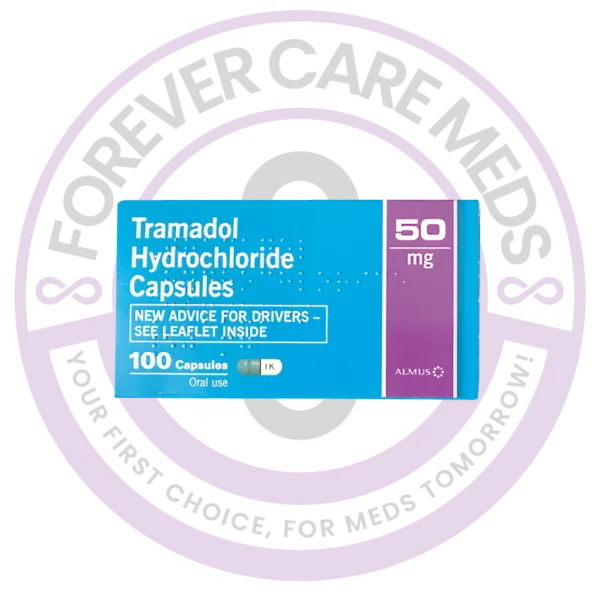
Tramadol Hydrochloride 50mg capsules contain an opioid pain-relief medicine used for the management of moderate to severe pain when a prescriber considers Tramadol appropriate.
Each hard capsule contains 50mg of Tramadol Hydrochloride. This product is supplied in a quantity of 100 capsules, with manufacturer options including Almus, Bristol Laboratories, Accord Healthcare, Genesis, RelonChem, Tillomed, Noumed and Brown & Burk, subject to availability.
Tramadol is a prescription-only Class C, Schedule 3 controlled drug in the UK. It can cause tolerance, physical dependence, addiction and withdrawal, so it should only be taken exactly as prescribed.
Always check the manufacturer, strength, dispensing label and patient information leaflet supplied with your medicine before taking Tramadol.
Order by 1:30pm on a weekday to ensure your order is picked, processed and dispatched the same day, orders after 1:30pm will be dispatched on the next working day.
Please note:
Next-day Delivery UK orders between 1:30pm on Friday and 1:30pm on Monday are delivered on Tuesday.
Once we reach our cut-off point, which is 1:30pm, our team takes a short break from communications from 1:30pm until 5:00pm, so we can carefully pack and prepare our daily orders for next-day delivery. During this time, we may not be able to respond straight away, but we’ll pick up and reply to all messages as soon as we’re back at 5:00pm.
Royal Mail Delivery Charges:
Order on Monday - Thursday
Next-day Special Delivery (before 1pm): £10.50
Order on Friday
Next-day Saturday Special Delivery (before 1pm): £15.50
Bank holiday Mondays are a public holidays and therefore, Royal Mail do not operate a delivery service on these days, this also applies to all other public holidays such as Easter, Christmas Day, Boxing Day, New Years Day (1st).
If you order your parcel on a Bank Holiday weekend, it will be dispatched on Tuesday and delivery will take place on the Wednesday.
Tramadol Hydrochloride 50mg capsules contain Tramadol, an opioid analgesic used for the treatment of moderate to severe pain.
Tramadol acts within the central nervous system and changes the way pain signals are processed. It can reduce the perception of pain, although it may not remove pain completely.
Tramadol may be prescribed when a healthcare professional determines that an opioid medicine is appropriate, including in some cases of pain following surgery, injury or other conditions associated with moderate to severe pain.
For the wider range of medicines associated with pain management, visit our Pain Relief category.
Tramadol is available only on prescription and is a controlled medicine. Because repeated opioid use can cause tolerance, dependence and addiction, treatment should follow the instructions given by your prescriber.
Tramadol is used for moderate to severe pain.
The reason it is prescribed can vary between patients. Treatment may be considered for acute pain, such as pain associated with an operation or significant injury, or for certain longer-lasting pain conditions where other treatment has not provided sufficient relief.
Whether Tramadol is appropriate depends on the individual, their medical history, other medicines being taken, and the nature of the pain.
It should not be taken simply because another person experiences similar symptoms, and prescription Tramadol should never be shared.
For broader educational content about different pain medicines, you can browse our Pain Medicines guides.
Different manufacturers can use different inactive ingredients, capsule appearances and packaging.
Always check the actual manufacturer, packaging and patient information leaflet supplied with your medicine, particularly if you have allergies or intolerances.
Tramadol is an opioid medicine that acts within the brain and central nervous system.
It affects opioid receptors involved in the processing of pain and also influences certain chemical signalling pathways within the nervous system. These actions can reduce how strongly pain is perceived.
The effect of Tramadol varies between individuals. The appropriate treatment, dose and duration should therefore be determined by the healthcare professional responsible for your care.
Standard Tramadol products can begin relieving pain within approximately 30 to 60 minutes, while modified-release forms behave differently. Always follow the information supplied with your specific medicine rather than assuming that all Tramadol products work in exactly the same way.
For a wider comparison of opioid and non-opioid pain medicines, read our Dihydrocodeine and other painkillers comparison guide.
Take Tramadol exactly as instructed by your doctor, pharmacist or prescribing healthcare professional.
50mg describes the strength of each capsule. It is not a universal recommended dose.
The amount of Tramadol appropriate for you and how often it should be taken depend on factors such as the type and severity of pain, your response to treatment, other medicines and your general health.
Swallow the capsule whole with a glass of water.
Always follow:
Do not:
If Tramadol is not controlling your pain sufficiently, speak to your healthcare professional rather than changing the dose yourself.
If you forget to take Tramadol, check the patient information leaflet supplied with your medicine and follow the instructions provided by your doctor or pharmacist.
Do not take two doses at the same time to make up for a forgotten dose.
If it is nearly time for the next prescribed dose, you will generally be advised not to double up.
If you are uncertain what to do, ask a healthcare professional for advice.
Some people require Tramadol only for a short period, while others may be prescribed treatment for longer depending on their condition.
The duration of treatment should be reviewed because prolonged opioid use increases the risk of tolerance and dependence.
If you have been taking Tramadol for more than a few weeks, your treatment plan may include instructions explaining when and how the medicine should eventually be reduced.
Do not suddenly stop Tramadol after regular or longer-term use without discussing it with your doctor.
The body can become physically dependent on opioids. Abruptly stopping treatment can therefore cause withdrawal symptoms.
Possible withdrawal symptoms can include:
Your healthcare professional may gradually reduce the dose to reduce the likelihood or severity of withdrawal symptoms.
Tramadol is not suitable for everyone.
Before taking it, make sure the healthcare professional responsible for your treatment knows about your medical conditions and all medicines, supplements and remedies you use.
Medical advice is particularly important if you:
Tramadol is not suitable for children under 12 years of age.
Always check the manufacturer-specific patient leaflet for additional precautions.
Like all medicines, Tramadol can cause side effects, although not everyone experiences them.
Very common side effects include:
Common side effects can include:
Speak to your doctor or pharmacist if a side effect becomes troublesome, persists or causes concern.
Some reactions require urgent medical advice.
Seek urgent medical help if you experience symptoms such as:
The complete side-effect profile can differ slightly between manufacturers, so always read the leaflet supplied with your particular medicine.
Tramadol affects serotonin signalling and can, in uncommon circumstances, contribute to serotonin syndrome, particularly when combined with certain antidepressants or other serotonergic medicines.
Possible symptoms can include combinations of:
Seek prompt medical advice if symptoms suggesting serotonin syndrome develop.
Tell your doctor or pharmacist before taking Tramadol if you use antidepressants or any other medicines affecting serotonin.
Tramadol can increase the risk of seizures in some people.
The risk may be greater in people who already have epilepsy or another seizure disorder, and when Tramadol is used alongside medicines that can lower the seizure threshold.
Make sure your prescriber knows if you have ever experienced seizures or take medicines for epilepsy, depression or other neurological or psychiatric conditions.
Tramadol is an opioid and can cause tolerance, physical dependence and addiction.
Tolerance means repeated use may make the medicine feel less effective over time.
Do not respond to this by increasing your dose yourself.
Physical dependence means the body has adapted to the medicine and withdrawal symptoms may occur when it is stopped suddenly.
Addiction can involve difficulty controlling opioid use or a strong desire to continue taking the medicine.
Possible warning signs can include:
Speak to your doctor if you are concerned about tolerance, dependence, addiction or how you are using Tramadol.
Some people are prescribed or advised to use more than one type of pain medicine, but combinations should be appropriate for the individual.
NHS guidance states that Tramadol can generally be taken with paracetamol or ibuprofen where those medicines are otherwise suitable for the individual.
However, do not start combining medicines simply on the basis of information on this page. Follow your prescription or ask your doctor or pharmacist if you are unsure.
Do not take codeine-containing medicines with Tramadol, because combining opioids can increase the likelihood of side effects.
For general information about how common non-Tramadol pain medicines differ, read our Co-Codamol, Ibuprofen and Paracetamol comparison guide.
Tell your doctor or pharmacist about all medicines you take before using Tramadol.
Important interactions can occur with medicines including:
Some combinations can increase drowsiness, breathing problems, seizures or serotonin-related effects.
The patient information leaflet supplied with your medicine contains a more complete interaction list.
It is best to avoid drinking alcohol while taking Tramadol.
Alcohol can increase drowsiness and impairment and can increase the risk of serious opioid-related effects.
Tramadol can make some people:
Do not drive, cycle, use tools or operate machinery if Tramadol affects your ability to do these activities safely.
Taking more Tramadol than prescribed can be dangerous.
An overdose can cause serious opioid toxicity.
Possible symptoms can include:
If you have taken more Tramadol than prescribed, seek urgent medical advice. NHS guidance advises contacting 111 if two or more extra doses have been taken.
Call 999 or go to A&E immediately if someone:
Do not drive yourself to A&E.
If possible, take the medicine packaging, patient information leaflet, remaining capsules and details of any other medicines being taken.
The patient information leaflet may vary according to the manufacturer supplied.
This product may currently be supplied by manufacturers including Almus, Bristol Laboratories, Accord Healthcare, Genesis, RelonChem, Tillomed, Noumed or Brown & Burk, subject to availability.
Always read the leaflet contained in the actual Tramadol Hydrochloride 50mg capsule pack you receive.
The manufacturer-specific leaflet contains important information about:
Because brands can vary, one manufacturer’s leaflet should not be assumed to represent every product option available on this page.
Always follow the instructions on your dispensing label and the leaflet supplied with your medicine.
If anything is unclear, ask your doctor or pharmacist before changing the way you take Tramadol.
Tramadol is an opioid analgesic prescribed for moderate to severe pain.
The reason it is prescribed and the duration of treatment depend on the patient’s circumstances and should be determined by the healthcare professional responsible for their care.
Yes.
Tramadol belongs to a group of medicines called opioids. It acts within the central nervous system to reduce the perception of pain.
Because opioids can cause tolerance, dependence and addiction, Tramadol should only be used as prescribed.
Yes.
Tramadol is a Class C, Schedule 3 controlled drug in the UK and is available only on prescription.
Tramadol can cause addiction and physical dependence, particularly with repeated or prolonged use.
Take the medicine only as prescribed. Do not increase the dose yourself or use it for longer than instructed.
Speak to your doctor if you are concerned about your use of Tramadol.
Do not suddenly stop regular or longer-term Tramadol treatment without medical advice.
Stopping suddenly can cause opioid withdrawal symptoms.
Your doctor may recommend gradually reducing the dose when treatment is no longer required.
Standard Tramadol formulations generally begin working within approximately 30 to 60 minutes.
Modified-release Tramadol works differently, so always check the specific product and patient information leaflet supplied with your prescription.
Yes.
Sleepiness and tiredness are common side effects of Tramadol. It can also cause dizziness and affect concentration.
Do not drive or operate machinery if you are affected.
Yes. Constipation is one of the common side effects associated with Tramadol.
Speak to your doctor or pharmacist if constipation becomes persistent or troublesome.
NHS guidance states that Tramadol can generally be taken with paracetamol where paracetamol is otherwise suitable for that person.
However, follow the treatment plan provided by your healthcare professional rather than adding another medicine yourself.
Tramadol can generally be taken with ibuprofen in people for whom ibuprofen is otherwise suitable.
Ibuprofen is not appropriate for everyone, so check with a doctor or pharmacist if you are unsure.
Codeine-containing medicines should not be taken with Tramadol because this can increase opioid-related side effects.
Co-Codamol contains Codeine, so do not combine it with Tramadol unless your healthcare professional has specifically reviewed your treatment.
No. The Tramadol Hydrochloride 50mg capsules described on this page contain Tramadol Hydrochloride as the active medicinal ingredient.
They are different from combination pain medicines that contain paracetamol.
Always check the complete ingredient list in the leaflet supplied with your particular manufacturer.
No.
Tramadol is an opioid analgesic, not a non-steroidal anti-inflammatory drug (NSAID).
It reduces the perception of pain through its effects on the central nervous system rather than primarily reducing inflammation.
Check the leaflet supplied with your medicine or ask your doctor or pharmacist for advice.
Do not take two doses together to compensate for a forgotten dose.
Taking too much Tramadol can be dangerous.
Seek urgent medical advice if you take more than prescribed. Contact NHS 111 if two or more extra doses have been taken.
Call 999 for severe breathing problems, loss of consciousness, a serious seizure or another life-threatening reaction.
There is no single dose that is appropriate for everyone.
50mg is the strength of each capsule, not a personalised dosage recommendation.
Take only the number of capsules and frequency stated on your prescription and dispensing label.
This product is currently supplied as:
100 Tramadol Hydrochloride 50mg capsules.
Current selectable options include Almus, Bristol Laboratories, Accord Healthcare, Genesis, RelonChem, Tillomed, Noumed and Brown & Burk, together with an Any Brand/No Preference option.
Availability can change.
Always check the manufacturer, packaging, strength and patient information leaflet supplied with your medicine.

Outstanding as always,excellent communication and fast delivery

 Verified owner
Perfect 👌
 Verified owner
amazing service never any issues
Verified ownerCan’t complain with price, product or service! Outstanding experience overall, really, which is completely in-keeping with what I’ve done go expect from ForeverCare.
Verified ownerAlways 10/10 service from these guys. Thank you so much.
 Verified owner
Brilliant service and communication is excellent, quick to reply and always professional and friendly.
Exceptional service 😊
 Verified owner
Excellent, speedy service. Genuine products.