Price range: £ 33.99 through £ 48.99
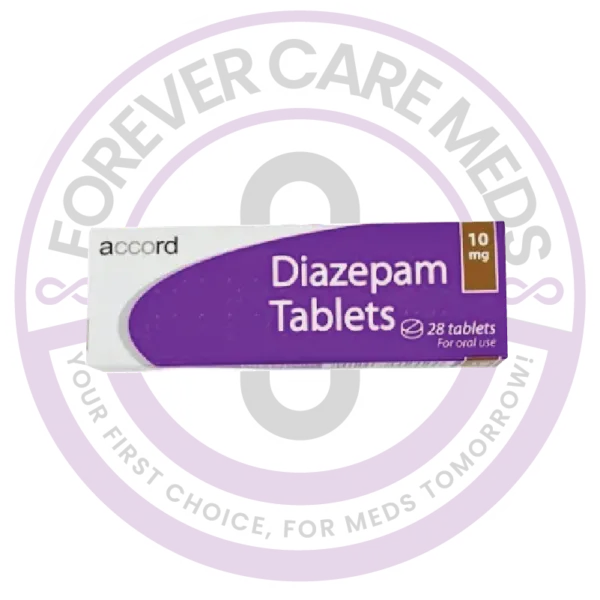
Diazepam tablets are available on this page in 5mg and 10mg strengths, supplied in packs of 28 tablets. Diazepam is a prescription-only benzodiazepine used for conditions including severe anxiety, muscle spasms and certain seizures, and it may also be used as a sedative before some medical procedures.
Current manufacturer options include Accord Healthcare, Almus and Teva UK, together with an Any Brand/No Preference option, subject to availability.
Diazepam is a Class C, Schedule 4 Part 1 controlled drug in the UK. Benzodiazepines can cause tolerance, dependence, addiction and withdrawal, so Diazepam should be taken only as prescribed and should not be stopped suddenly after regular use without medical advice.
Always check the strength, manufacturer, dispensing label and patient information leaflet supplied with your actual medicine before taking it.
Order by 1:30pm on a weekday to ensure your order is picked, processed and dispatched the same day, orders after 1:30pm will be dispatched on the next working day.
Please note:
Next-day Delivery UK orders between 1:30pm on Friday and 1:30pm on Monday are delivered on Tuesday.
Once we reach our cut-off point, which is 1:30pm, our team takes a short break from communications from 1:30pm until 5:00pm, so we can carefully pack and prepare our daily orders for next-day delivery. During this time, we may not be able to respond straight away, but we’ll pick up and reply to all messages as soon as we’re back at 5:00pm.
Royal Mail Delivery Charges:
Order on Monday - Thursday
Next-day Special Delivery (before 1pm): £10.50
Order on Friday
Next-day Saturday Special Delivery (before 1pm): £15.50
Bank holiday Mondays are a public holidays and therefore, Royal Mail do not operate a delivery service on these days, this also applies to all other public holidays such as Easter, Christmas Day, Boxing Day, New Years Day (1st).
If you order your parcel on a Bank Holiday weekend, it will be dispatched on Tuesday and delivery will take place on the Wednesday.
Diazepam belongs to a group of medicines known as benzodiazepines. These medicines affect signalling within the central nervous system and can produce calming, muscle-relaxing, anticonvulsant and sedative effects depending on why they are prescribed.
This product page provides two tablet strengths:
Both are supplied in a quantity of 28 tablets.
The strength printed on the pack describes the amount of Diazepam contained in each tablet. It does not tell you how many tablets you personally should take. Your prescribed dose depends on the reason for treatment, your response, age, health and other medicines.
For more background on this medicine group, read our guide to benzodiazepines and how they are used.
Diazepam has several recognised clinical uses.
It may be prescribed for severe anxiety, including anxiety associated with symptoms such as shaking, sweating or difficulty sleeping. It is also used for muscle spasms and certain seizures and may sometimes be given as a sedative before surgery or another medical procedure.
You can explore the site’s wider Anti-Anxiety range for related conditions and medicine information.
Although Diazepam may sometimes be used when severe anxiety is associated with insomnia, it should not be viewed as a general-purpose sleeping tablet. Its use should follow an individual treatment plan.
For broader sleep-related information, visit the Sleeping Aids section.
The 5mg and 10mg options are different strengths of the same active medicine.
A 10mg tablet contains twice the amount of Diazepam contained in a 5mg tablet, but this does not mean that a higher strength is automatically more appropriate or that patients should change strengths themselves.
The correct strength and dose should be determined by the healthcare professional responsible for the treatment.
Our separate Diazepam 5mg strength, uses and safety guide explains the 5mg strength in more detail without using the product page as a self-dosing guide.
Diazepam is generally intended for short-term treatment. NHS guidance states that it should normally be used for up to four weeks because longer use increases the risk of dependence, addiction and withdrawal.
The duration may vary according to the clinical reason it has been prescribed and the person’s circumstances.
Do not continue Diazepam for longer than advised simply because symptoms return or because the medicine feels less effective.
A reduced effect after repeated use may indicate tolerance, and increasing the dose without medical advice can increase risk. The MHRA strengthened UK benzodiazepine warnings in 2026 specifically around tolerance, dependence, addiction and withdrawal.
Diazepam enhances the activity of gamma-aminobutyric acid, or GABA, an inhibitory signalling chemical in the brain.
By strengthening this calming activity within the nervous system, Diazepam can reduce excessive nervous-system activity associated with conditions such as severe anxiety, muscle spasms and seizures.
The effect experienced by an individual depends on the reason the medicine has been prescribed, the dose and other personal factors.
Take Diazepam exactly as instructed by your prescriber.
Diazepam tablets can be swallowed with water and may be taken with or without food.
Do not use the 5mg or 10mg strength displayed on this page as a dosing instruction.
Always follow:
Do not:
If the medicine does not appear to be working as expected, speak to your healthcare professional rather than increasing the dose.
If you miss a regular dose of Diazepam, NHS guidance advises skipping the missed dose and taking the next dose as usual.
Do not take two doses together to compensate for a forgotten dose.
If your particular prescribing instructions differ or you are unsure what to do, check the leaflet supplied with your medicine or ask your doctor or pharmacist.
Diazepam is usually prescribed for a limited period.
The need for continued treatment should be reviewed, particularly if it has been taken regularly for several weeks.
Do not interpret continued symptoms as a reason to extend treatment yourself.
Diazepam should not usually be stopped abruptly after regular use.
Suddenly stopping a benzodiazepine can cause withdrawal symptoms, and the dose may need to be gradually reduced according to medical advice.
Withdrawal symptoms can vary and may include symptoms such as:
Withdrawal can sometimes be more significant after prolonged use or higher doses.
Your doctor should advise how treatment should be reduced.
Tell your doctor or pharmacist about your health conditions and all medicines, supplements and remedies you use.
Diazepam may not be suitable, or may require additional care, if you:
Always check the leaflet belonging to your particular brand because ingredients and warnings may vary between manufacturers.
Not everyone taking Diazepam develops side effects.
Commonly reported effects include:
Diazepam may affect balance, reaction time and concentration.
Speak to a healthcare professional if a side effect is persistent, troublesome or worsening.
Serious reactions are less common.
Seek urgent medical advice if you develop symptoms including:
Severe swelling of the lips, tongue or throat, serious difficulty breathing, or loss of consciousness can indicate a medical emergency.
Diazepam can cause tolerance, physical dependence and addiction, but these terms describe different problems.
Tolerance means that repeated use can make the medicine feel less effective.
Physical dependence means the body has adapted to the medicine and withdrawal symptoms can develop if it is suddenly stopped or reduced too quickly.
Addiction involves difficulty controlling medicine use or a strong urge to continue using it despite harm.
In January 2026, the MHRA strengthened warnings for benzodiazepines to make these risks clearer, including warnings about withdrawal and the need for safe tapering.
Possible warning signs can include:
Speak to a healthcare professional if you are concerned about your use of Diazepam.
Do not drink alcohol while taking Diazepam.
Alcohol can increase sedation and can contribute to dangerous breathing problems or difficulty waking. NHS guidance also advises avoiding grapefruit juice because it may increase the risk of side effects.
Particular care is also needed with medicines that cause sedation, including certain:
The MHRA specifically highlights the risks of using benzodiazepines with opioids or alcohol.
Tell your doctor and pharmacist about everything you take so interactions can be assessed properly.
Diazepam can reduce alertness and make you sleepy.
Do not drive, cycle, use machinery or perform another activity requiring full concentration if the medicine affects you.
Taking more Diazepam than prescribed can be dangerous.
NHS guidance advises contacting NHS 111 if you take more than your prescribed dose.
Symptoms after excessive Diazepam can include:
The risk can be more serious when Diazepam is taken with alcohol, opioids or other medicines that suppress the central nervous system.
Call 999 or go to A&E immediately if someone:
Do not drive yourself to A&E.
If possible, take the Diazepam packaging, patient leaflet, remaining tablets and information about other medicines being taken.
Diazepam 5mg and 10mg tablets can be supplied by different manufacturers, so the patient information leaflet included with your medicine may vary according to the brand supplied.
Current UK medicine records include separate patient leaflets for Diazepam 5mg and Diazepam 10mg tablets. Both are prescription-only medicines.
Always read the leaflet contained in your actual pack before taking the tablets.
It provides manufacturer-specific information about:
Do not assume that a leaflet belonging to one manufacturer or strength applies to every Diazepam variation.
Follow the dispensing label and leaflet supplied with your actual medicine.
Diazepam is a benzodiazepine used for conditions including severe anxiety, muscle spasms and certain seizures. It may also be used as a sedative before some medical or surgical procedures.
The difference is the amount of Diazepam in each tablet.
A 5mg tablet contains 5mg, while a 10mg tablet contains 10mg.
The higher strength is not automatically more appropriate. Use only the strength and number of tablets prescribed for you.
The effect of 5mg varies according to the individual, reason for treatment, tolerance and other factors.
A strength should not be judged simply as “strong” or “weak” without clinical context.
For more detailed information, see our guide to Diazepam 5mg strength and safety.
Yes.
Diazepam belongs to the benzodiazepine group of medicines.
Yes.
Diazepam is classified as a Class C drug and Schedule 4 Part 1 controlled drug under UK controlled-drug legislation.
Diazepam is the active medicine historically associated with the Valium brand name.
This generic Diazepam product page should be identified according to the manufacturer and packaging actually supplied.
Yes.
Diazepam and other benzodiazepines can cause addiction and physical dependence, even when used therapeutically. UK medicine warnings were strengthened in 2026 to make the risks of addiction, dependence, tolerance and withdrawal clearer.
Diazepam is usually intended for short-term use, and NHS guidance states that it should generally be used for up to four weeks.
Your treatment duration should follow your prescriber’s instructions.
Regular Diazepam treatment should not normally be stopped suddenly.
Abrupt withdrawal can cause symptoms, so a healthcare professional may advise gradually reducing the dose.
No. NHS guidance advises not drinking alcohol while taking Diazepam because alcohol can increase its sedative effects and the risk of serious side effects.
It can.
Drowsiness and reduced alertness are known Diazepam side effects. Do not drive or operate machinery if you are affected.
Diazepam may sometimes be prescribed when severe anxiety is associated with insomnia, but it should not be treated as a routine general sleeping medicine.
NHS guidance advises skipping the forgotten dose and taking the next scheduled dose normally.
Do not take two doses together to compensate for a missed dose.
Taking more Diazepam than prescribed can be dangerous.
Contact NHS 111 if you take more than the prescribed dose. Call 999 for severe breathing problems, loss of consciousness or another life-threatening reaction.
This product is supplied in a quantity of:
28 tablets
with both 5mg and 10mg strengths available on the product page.
Current selectable options include:
Accord Healthcare, Almus and Teva UK, together with an Any Brand/No Preference option.
Availability may change, so always check the manufacturer, strength and patient information leaflet supplied with your medicine.

Outstanding as always,excellent communication and fast delivery

 Verified owner
Perfect 👌
 Verified owner
amazing service never any issues
Verified ownerCan’t complain with price, product or service! Outstanding experience overall, really, which is completely in-keeping with what I’ve done go expect from ForeverCare.
Verified ownerAlways 10/10 service from these guys. Thank you so much.
 Verified owner
Brilliant service and communication is excellent, quick to reply and always professional and friendly.
Exceptional service 😊
 Verified owner
Excellent, speedy service. Genuine products.